


Which of you, wishing to build a tower, does not first sit down and count the cost, to see if he has enough to complete it? So asks Jesus, mid-parable, almost offhand — as if the answer is obvious. Of course you count first. Anything else is folly. (Luke 14:28)
Jesus wasn’t a stranger to building. He’d spent years with wood and stone before calling his first disciples to follow him. He knew that a tower looks simple from a distance but becomes complicated the moment you’re digging the foundations. So when he wanted a picture for what it costs to follow him, he reached for something practical and visible.
That word — sit down — is doing real work. Jesus is describing an intentioned pause: stop, take a seat, and reckon honestly with what’s in front of you before you build.
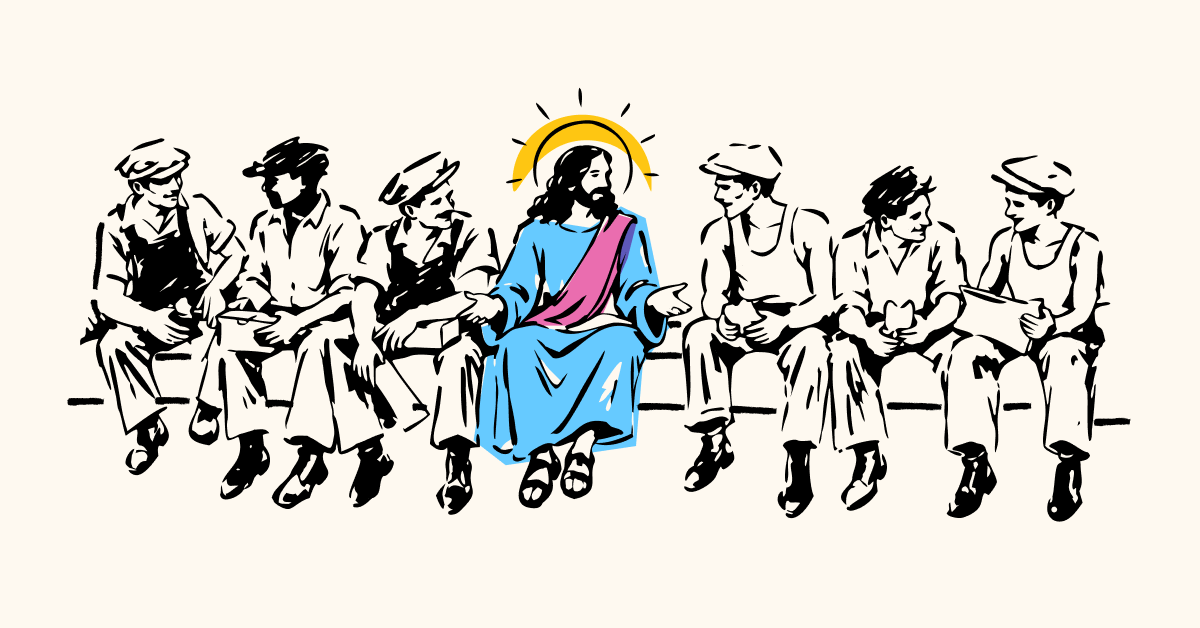
Built Fast, Never Stopped Counting
It turns out this posture of slowed-down consideration is what the best-built towers today model for us. I recently read Bent Flyvbjerg’s How Big Things Get Done, whose first chapter — “Think Slow, Act Fast” — surveys decades of megaprojects and finds the same story again and again: most megaprojects (95%) land late and over budget.
One of the rare success stories is the Empire State Building, finished under budget and ahead of deadline, at a pace that still looks absurd today — at one point in 1930, crews erected twenty-two stories of steel in twenty-two working days.
The building’s own developers liked to tell it as a tidier story than that. A 1931 publicity pamphlet boasted that before a single shovel of dirt was moved, the architects already knew “how many rivets and bolts would be needed.” Dig into the trade-press record and we discover that design, demolition, and foundation construction overlapped — it wasn’t a linear process, at least not initially.
What made it work wasn’t necessarily a long planning phase — it was that the posture of counting the cost was never neglected. General contractor William Starrett ran daily inspection reports tracking cost and progress on every part of the job; steel arrived one lift at a time because there was no room on site for anything uncounted.
And that discipline wasn’t improvised under deadline pressure — Starrett had already run all U.S. Army construction for the War Industrial Board during the First World War, and published a book on the discipline a year before ground broke. It arrived fully formed because it had already been tested somewhere harder.
Counting the cost, then, is a discipline you sustain while you build, and it’s often forged in seasons shaped by past pressure tests.
Starrett’s discipline was honed in an army office years before anyone in New York cared about it. Jesus uses the counting the cost of the tower to ask something similar of anyone who’d follow him — can you afford to follow me? The distinct claim of Christianity is that we can’t afford not to follow Jesus, even though it means facing what’s in store: sacrifice, resistance, hardship, persecution, isolation, obedience peppered with loss.
The rich truth is that once you accept the cost, you’re not the chief builder of your destiny anymore. You’re the messy but beautiful construction site. It’s Jesus who does the slow work in you.
On your decision to follow Jesus you are mercifully and instantly gifted access to the creator and are justified for relationship. Then slowly, daily sanctification is wheelbarrowed upon your life in increments too small to notice, until, suddenly, one day what was quietly being built is revealed in all its glory! Do we really truly understand what God is building in those who follow him? We can’t even begin to comprehend!
What AI Tempts Us to Skip
Most of us aren’t building skyscrapers, though — we’re building sentences, strategies, decisions, sermons, code, and now with AI tools and models that provide instant results.
James Kelly, founder of FaithTech, names something quite perceptive and helpful about this moment for those adopting AI to build and create: there used to be a gap between a question and an answer, and that gap was where thought actually happened. As AI closes it, he writes, “immediacy now feels normal and patience feels inefficient.”
Kelly’s argument is that we need godly leadership that resists the formation pressure AI exerts — not by rejecting the tool, but by refusing to let its pace become our default posture.
The real danger isn’t speed itself. It’s unconsidered and uncounted speed — the deliberate removal of that sit-down pause to count the cost that Jesus recommends to us, in practical projects and our relationship with him alike.
When the Builders Warn Us
It’s playing out at civilisational scale right now. This month, researcher Jacob Coxon resigned from Anthropic, warning that the race toward more powerful, self-improving AI is moving faster than anyone’s ability to make it safe — not because the people building it are unaware of the danger, but because each side is convinced that pausing just hands the advantage to someone less careful.
Numerous other AI safety researchers across the mainstream AI companies, concur often saying there is no viable plan for the risks of AI that improves itself.
It’s the tower-builder in Luke 14, surrounded by other builders racing to finish first, each one afraid that stopping to collectively count will simply hand the advantage to someone else. It’s building from fear — fear of competition down the road with different value systems, or even fear of other nation-states who dominate humanity.
When the gap between question and answer is squeezed out at this scale, that’s exactly when Christians need to be advocating for it to be put back — and we can’t really operate with any authority if we’re not doing this personally ourselves in our own building.
This moment is also a time to pray — the people closest to this technology are telling us plainly how high they believe the stakes are, and though the outcomes are debatable, there are clear, well-documented present dangers of people trying to misuse AI for cyberattacks, influence operations, surveillance, biology, and building weapons.
The warnings of a superintelligence — essentially AI self-building itself — without clearly defined boundaries perhaps also need to be heeded. Ex-Google CEO Eric Schmidt himself has said that when AI starts to self-improve, that’s the moment we need to “pull the plug” — he should know, having presided over Google as it built its own machine learning search engine.
There are small signs that some of the coordination this moment needs is actually being attempted, not just called for. We need to pray for those leading AI labs.
Counting the Cost of a Prompt
With all the global impact of AI, change ultimately begins at home. I feel as Christians there are questions to answer more personally. What does it look like to take up the posture of counting the cost with a tool like this?
Perhaps it starts with a habit of asking more: what are we losing by using AI? Are there times when a slower, more costly way would serve us better? What did we miss by letting the tool answer before we’d finished asking? What would we have noticed ourselves that we didn’t, because the answer arrived before the question had really settled in us?
And there’s a deeper question underneath those. Does the constant, unconsidered use of these tools quietly dampen our own spiritual formation — the slow work Jesus is doing in us, the sanctification that can’t be rushed? That’s not a question with a tidy answer. But it deserves the same posture Jesus asked of the tower-builder: sit down first, and be honest about the cost.